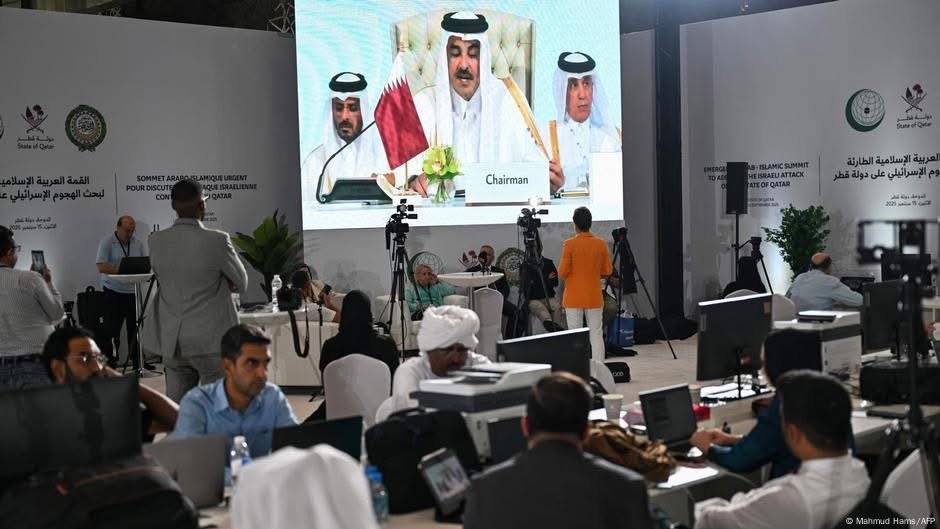
Middle East Debate Heats Up: Calls Grow for an ‘Islamic NATO’ After Israeli Strike on Qatar
ANN NEWS
Israeli Strike on Qatar Revives Talk of a Joint Arab–Islamic Defense Alliance
The first-ever Israeli strike on Qatar has triggered major shifts in Arab defense policies, sparking renewed calls for greater cooperation and joint defense agreements across the Gulf region. Some politicians are even floating the idea of forming an “Islamic NATO.”
Kristin Diwan, a senior resident scholar at the Arab Gulf States Institute in Washington, wrote shortly after the attack: “The Israeli strike has shaken Gulf states’ assumptions about their relationship with the United States and is bringing them closer together.” She added, “These oil-rich monarchies share many similarities … such a direct assault on their sovereignty and security is unacceptable to all of them.”
Sanam Vakil, Director of the Middle East and North Africa Programme at Chatham House, echoed similar concerns. Writing in the British newspaper The Guardian earlier this month, she noted: “As a result, Gulf rulers are accelerating their push for greater strategic autonomy and are more determined to reduce their reliance on the United States.”
It is this backdrop that has fueled growing debate over the possible creation of an “Islamic NATO” — a defense alliance of Arab and Muslim-majority states modeled after the North Atlantic Treaty Organization (NATO).
Gulf Leaders Push for Strategic Autonomy, Float Idea of an ‘Islamic NATO’